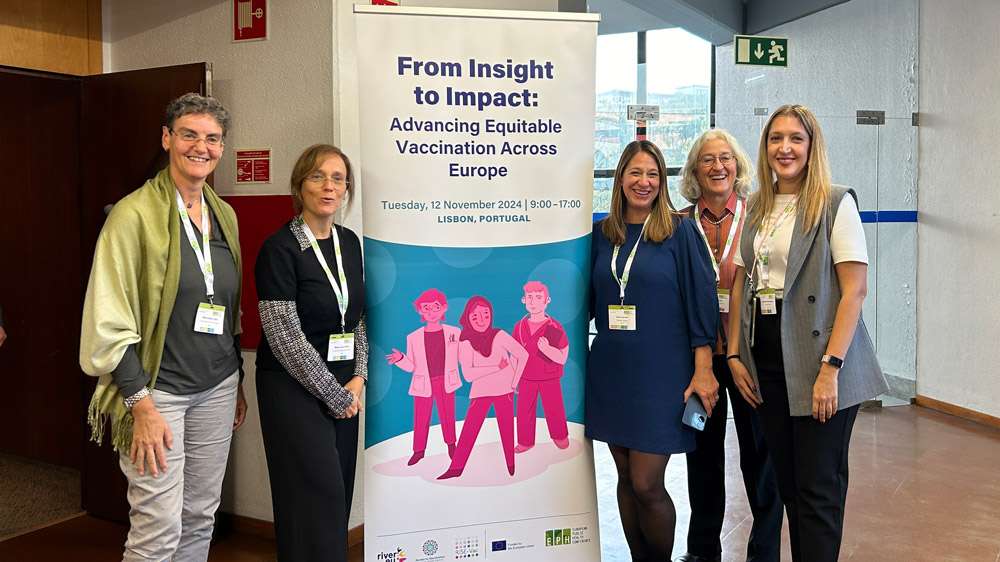
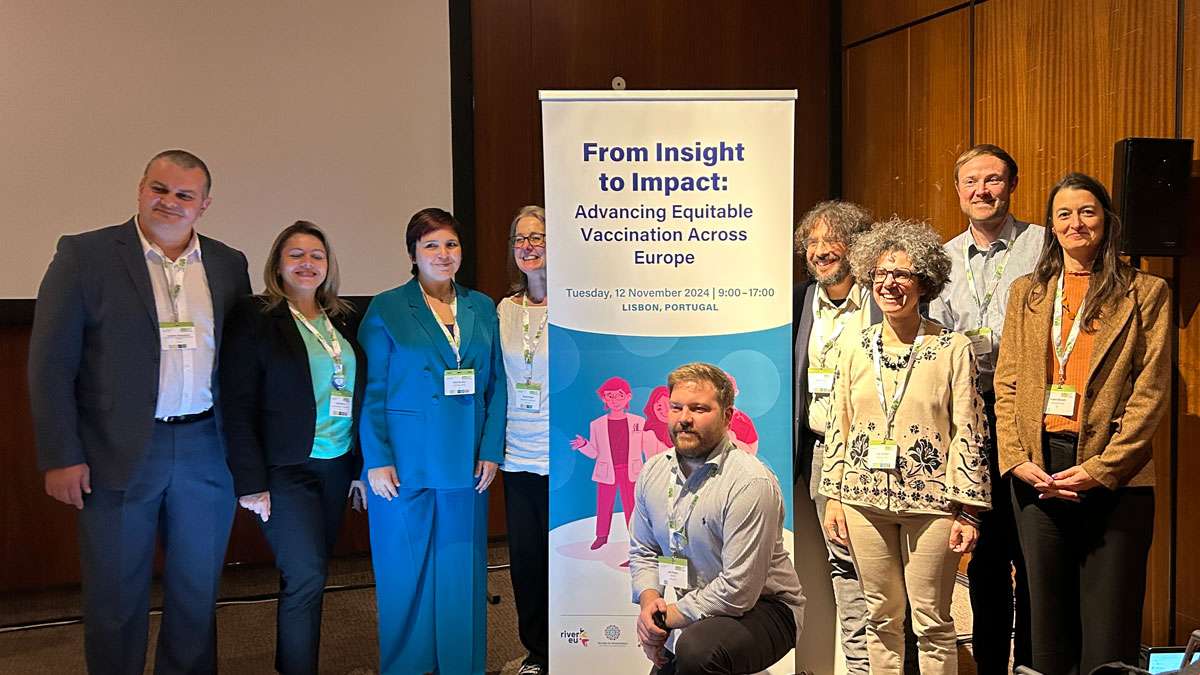
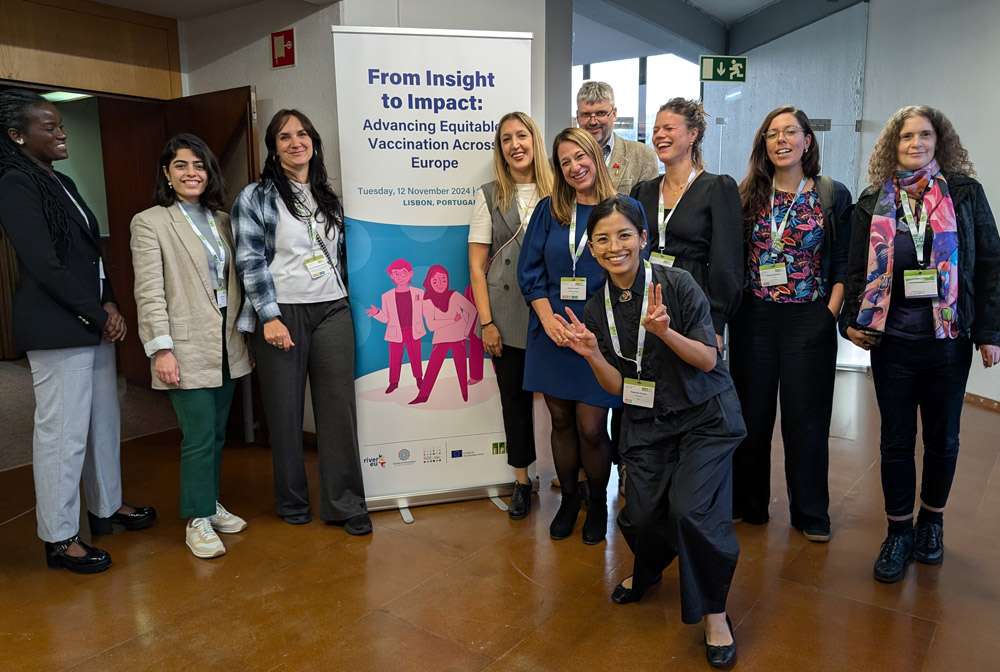
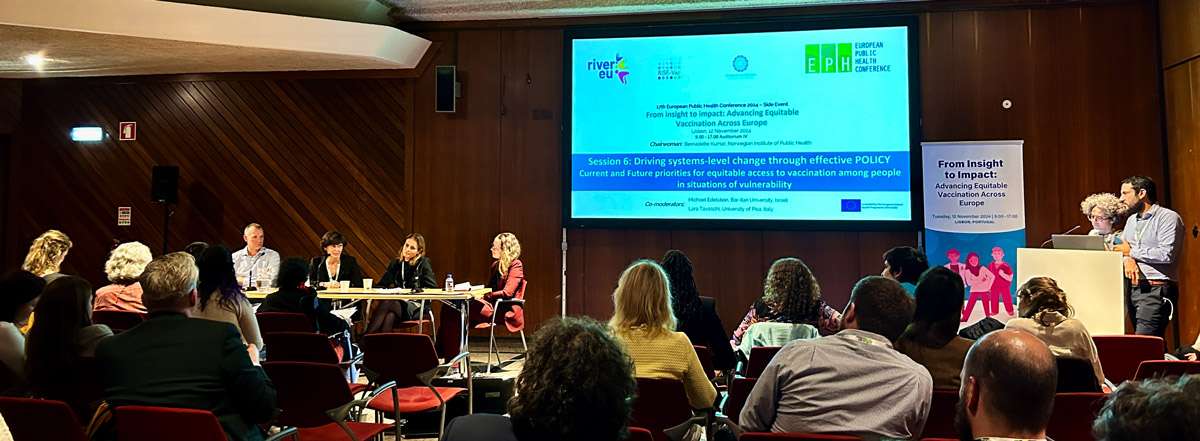
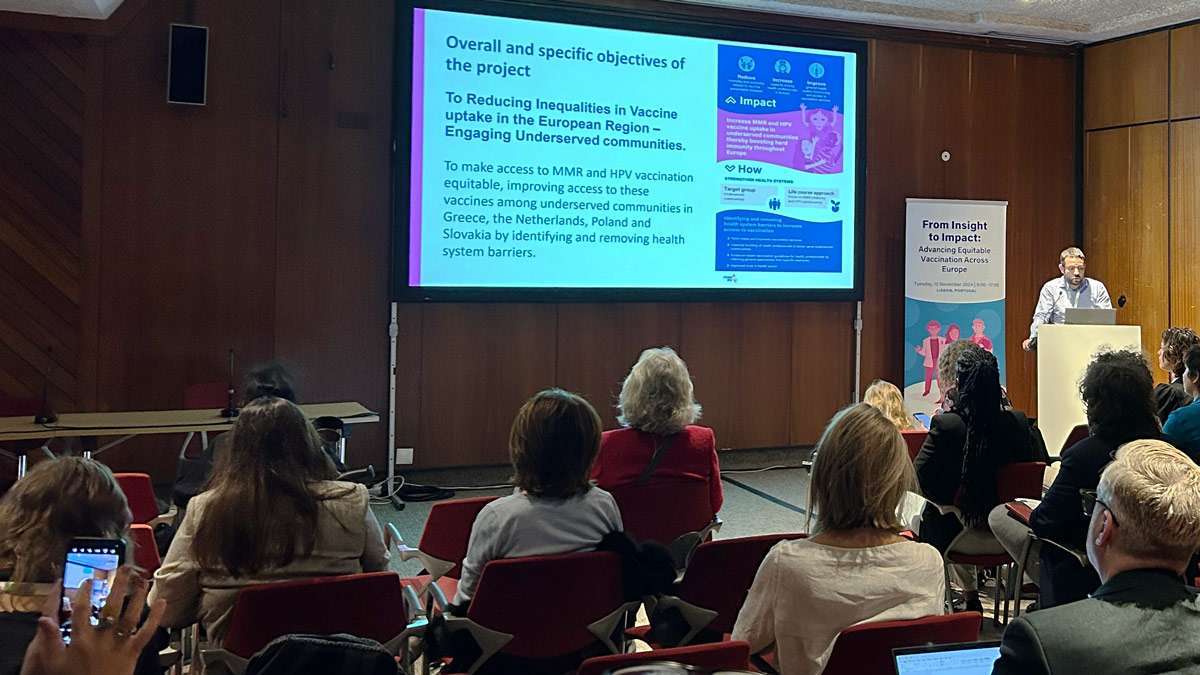
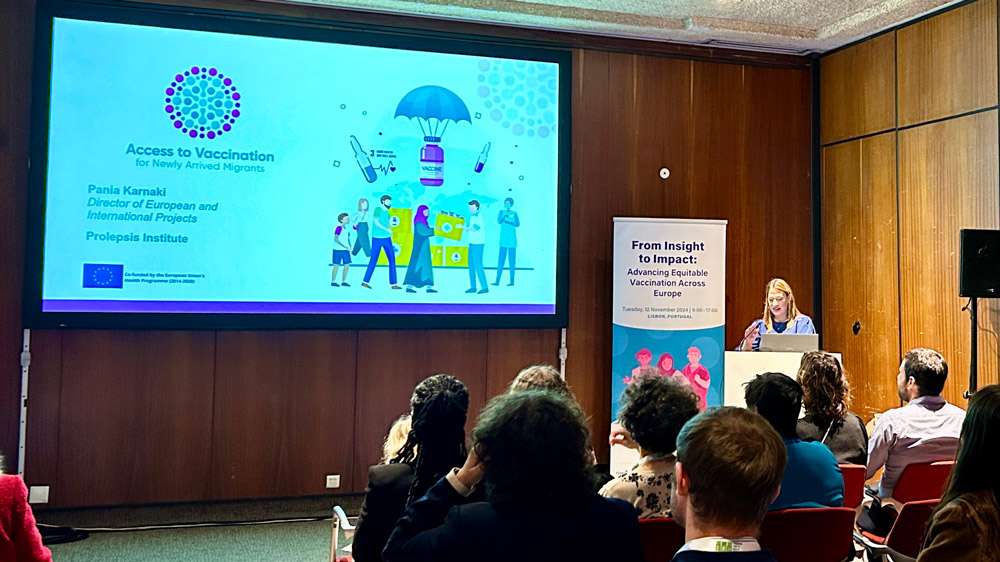
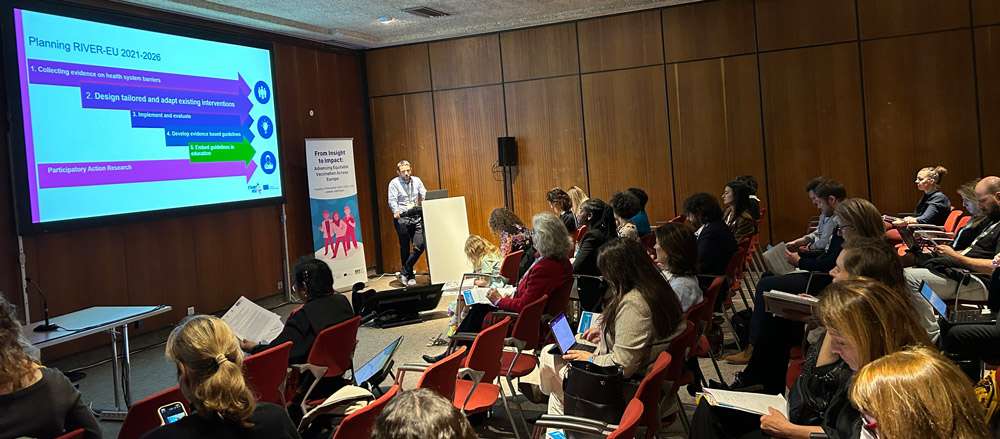
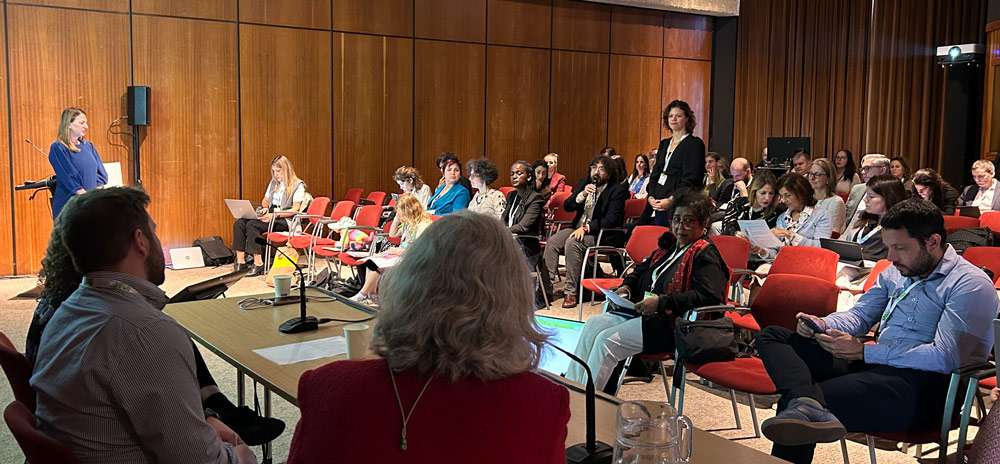
On November 12th, 2024, the RIVER-EU project, alongside RISE-Vac and AcToVax4NAM, hosted an engaging pre-conference session at the 17th European Public Health Conference in Lisbon. Titled, “From Insight to Impact: Advancing Equitable Vaccination Across Europe”, the event brought together public health professionals, policymakers, and researchers to discuss proven ways to address the systematic barriers affecting vaccine uptake in underserved communities.
The three projects who hosted the pre-conference share a common vision to enhance vaccine uptake in underserved communities. The project leaders agreed that a shared platform such as a pre-conference would help amplify the common findings across the three projects and enhance learning, exploitation of results, and impact.
Rethinking “hard to reach” populations
A key takeaway that came out of the event was challenging traditional views that some populations are “hard to reach.” Instead, project partners demonstrated the barriers that are commonly faced by “underserved” communities, whose access to services such as vaccination has not been adequately ensured. This reframing shifts the “blame” for low vaccination rates away from individuals and helps identify – and address – systemic inequalities to enhance vaccine uptake.
Additional unifying themes emerged from the discussion:
- Embedding equity in systems: Equity should not be a siloed concept applied selectively; it must be embedded and mainstreamed throughout health systems to effectively address barriers.
- Data-driven interventions: The absence of reliable data on specific groups often leads to harmful assumptions, such as labeling populations as vaccine-hesitant or under-vaccinated. Underserved groups, like prison populations, are rarely measured or explicitly named, which makes them invisible in public health strategies. Gathering accurate, disaggregated data is essential to designing evidence-based, equitable policies.
- Evidence that meets needs: The best available evidence is not necessarily the highest-quality evidence—it is the evidence that solves problems and meets the needs of communities.
- Adapt, adapt, adapt: Even a ‘best’ practice can only be the best with adequate adaptation to the target context. What works for most, does not work for everyone. Effective interventions are those that are tailored to account for the unique circumstances of each community. Co-creating these approaches ensures their effectiveness and sustainability (e.g., “nothing about me, without me”).
- Avoiding vaccine ‘hostility’: Misguided approaches, especially those implemented without trust and genuine engagement, could turn vaccine hesitancy into vaccine ‘hostility’.
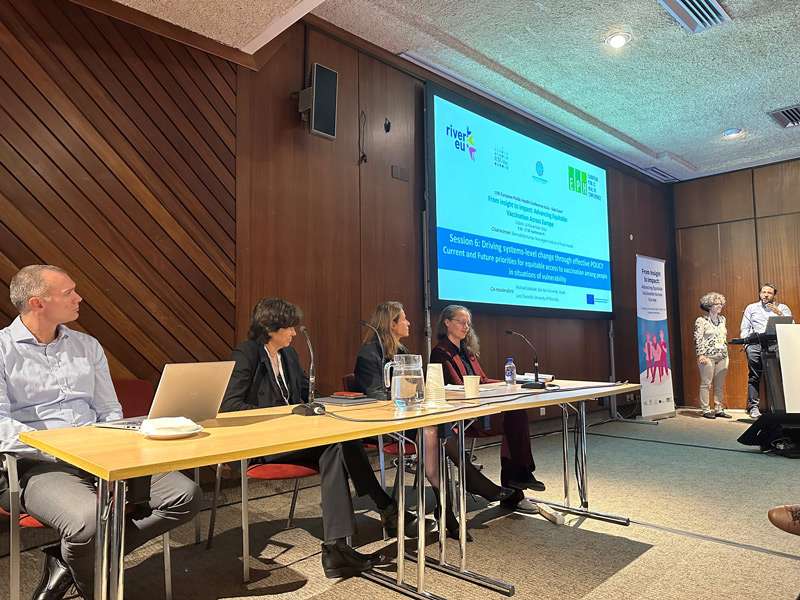
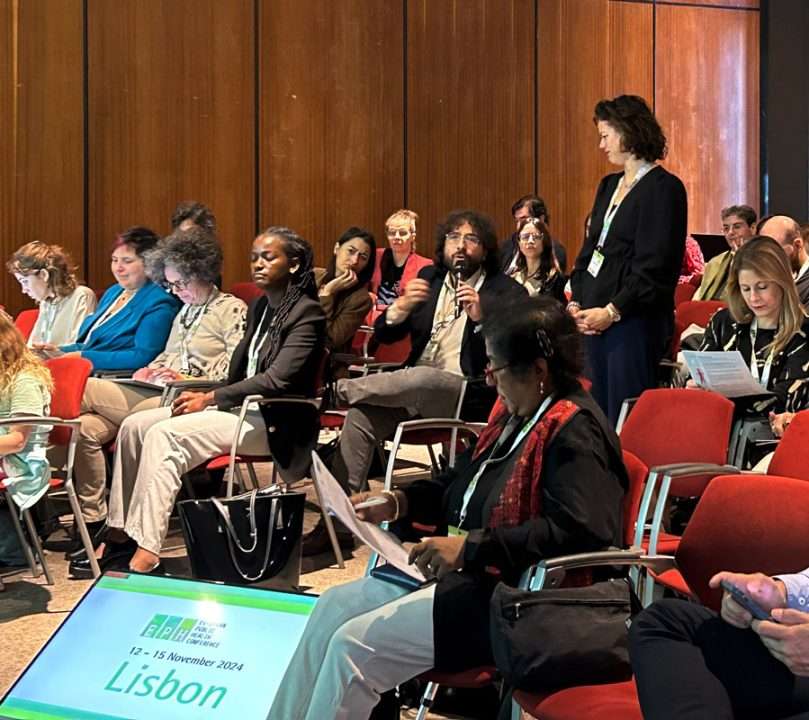
Participants were able to demonstrate with real-life examples that changing health systems is not easy, but it can be done!
Project highlights
The event showcased impactful work from the three organising projects, each addressing different communities, but similar barriers to equitable vaccination.
RIVER-EU
The RIVER-EU project focuses on improving vaccine uptake in underserved communities across Europe:
- Transferability: RIVER-EU’s participatory transferability analysis showed how we can identify what works and adapt successful interventions to local settings. Each country adopted unique strategies to train staff, address language barriers, and engage trusted figures, to ensure the interventions were culturally and contextually relevant.
- Co-created interventions: For marginalised Roma communities in Slovakia, people with Turkish and Moroccan backgrounds in the Netherlands, Ukranian migrants and refugees in Poland, and people with migration backgrounds in Greece, various interventions were co-designed with stakeholders to address unique community needs. Examples include the use of Roma Health Mediators in Slovakia and tailored educational materials for different cultural groups.
- Building trust: Trust was highlighted as the main key to success. Interventions were adapted to align with community dynamics, such as engaging trusted figures like general practitioners or cultural mediators depending on the local context.
RISE-VAC
The RISE-Vac project addresses vaccination challenges in prisons by enhancing vaccine literacy among inmates and staff:
- Whole-prison approach: Targeting both inmates and staff, RISE-Vac developed e-learning courses and multilingual informational materials to improve vaccine acceptance.
- Addressing challenges: Issues like staff workload, high turnover of inmates, and limited access to digital devices were tackled with innovative solutions, such as tailored training and respect for daily prison routines.
- Impact: Following interventions, vaccine hesitancy among prison staff decreased, and attitudes toward vaccination became more positive, showing measurable success. Data collection among inmates is still underway.
AcToVax4NAM
AcToVax4NAM aims to increase vaccination uptake among newly arrived migrants (NAMs) by addressing organisational vaccine literacy:
- Organisational vaccine literacy framework: This approach emphasises reducing complexity and building an environment where NAMs can make informed vaccination decisions.
- Creating tools: Their activities included developing training for “professionals for health”, creating a multilingual Glossary of Essential Vaccination Terms, and a Repository to support professionals in their daily practice and provide them with tools that can help to successfully address the barriers they face.
- Recommendations: The project’s outcomes highlighted the importance of entitlement (ensuring free vaccination access), reachability (creating multilingual and accessible services), and adherence (designing culturally tailored campaigns).
Looking ahead
The pre-conference reinforced that advancing vaccine equity requires systemic changes. The work of these three sister projects, RIVER-EU, RISE-Vac, and AcToVax4NAM, provides a roadmap for designing inclusive public health systems that leave no one behind.
We extend our gratitude to all speakers, moderators, and participants, for their valuable contributions.